HD Phone
Credit Link Sender
The business wanted to scale a credit flow that had never worked. A store visit revealed why — and changed the scope of the entire project, taking associate adoption from 0% to 35%.

Role
Year
Timeline
Impact
2025
8 weeks
35% usage
Lead UX Designer
TL;DR
The short version — if you're in a hurry
The tool had never worked — field associates couldn't access it at all
A store visit surfaced a structural platform problem, not a design problem
Evidence-based presentation realigned the business around a full rebuild
Rebuilt on an accessible platform — adoption went from 0% to 35%
**Due to confidentiality, some details and visuals have been omitted. Here are the key highlights.**
01 The Challenge
They wanted to scale something that had never worked
The business wanted to add the ProXtra card to the HD Phone credit link sender — a mobile tool that let store floor associates email customers a credit application link while they were still shopping. The plan was to mirror the existing Consumer card experience and reuse the current email template for ProXtra.
Before designing anything new, I needed to understand whether the existing pattern was actually worth scaling. What I found changed the project entirely: the Consumer card experience they wanted to copy had never actually worked in the field.
The assignment was to add a second card option. The real question was whether the foundation being built on had ever functioned at all.
"Before designing anything new, I needed to understand whether the existing pattern was actually worth scaling."
02 Discovery
The tool didn't exist for the associates who needed it most
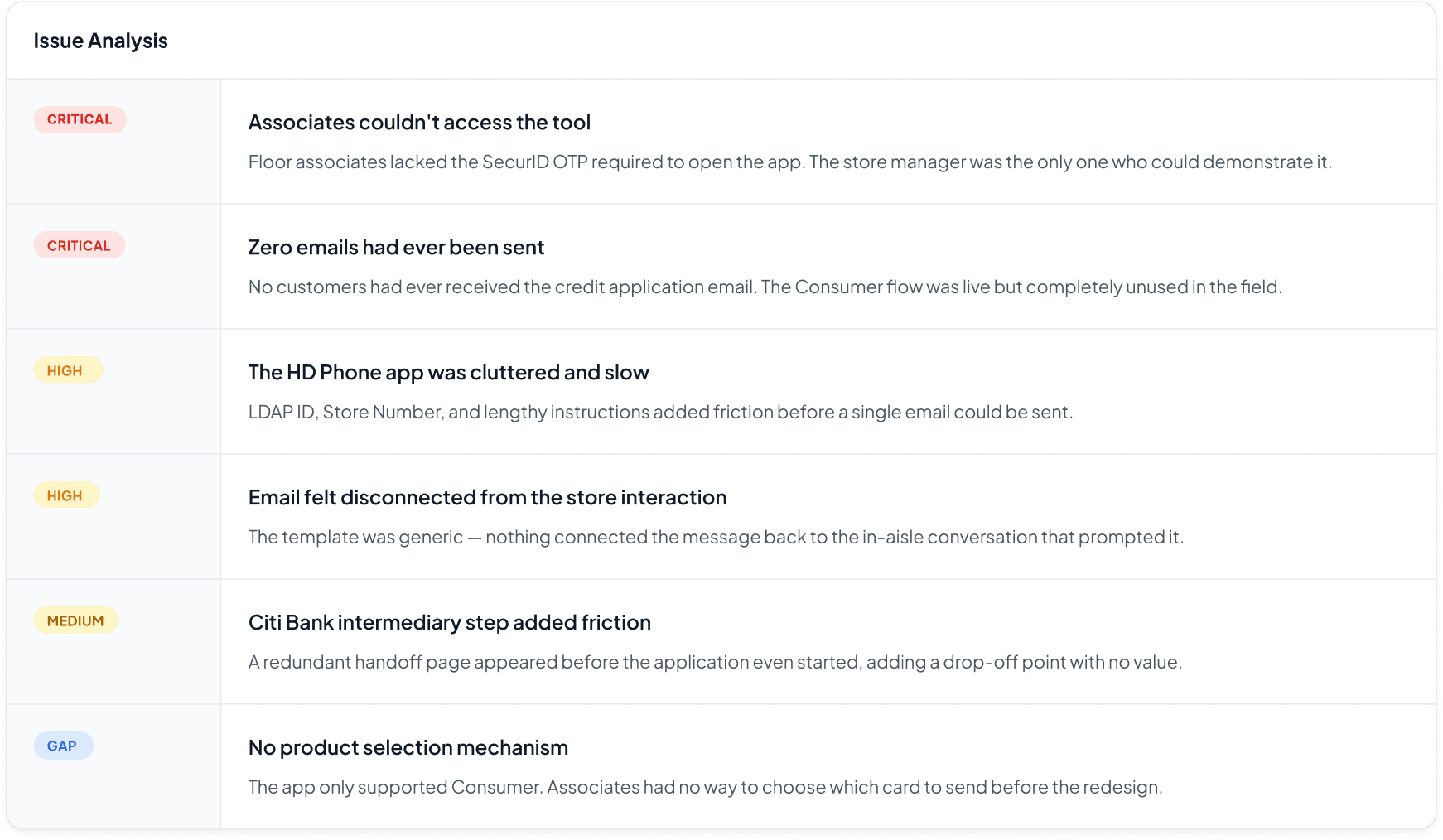
When I visited the store and asked floor associates to walk me through the tool, none of them could access it. The Credit Link Sender had been built on the Salesforce platform, and because Salesforce licenses carried a per-seat cost, access had been limited to a narrow group of associates handling home deliveries. The floor associates who were actually having credit conversations with customers every day — the people this tool was built for — had no access at all
This wasn't a configuration issue. After connecting directly with the Salesforce team, it became clear the access limitation was structural: the way the tool was built, it could never reach the broad associate population the business needed it to reach.
A store manager was able to open the app on his HD Phone, which gave me a way to audit the live experience directly. What I found confirmed the problem ran deeper than access alone.
The platform itself was the barrier. No design improvement to the existing tool could fix a structural access problem — this required a different conversation with the business entirely.
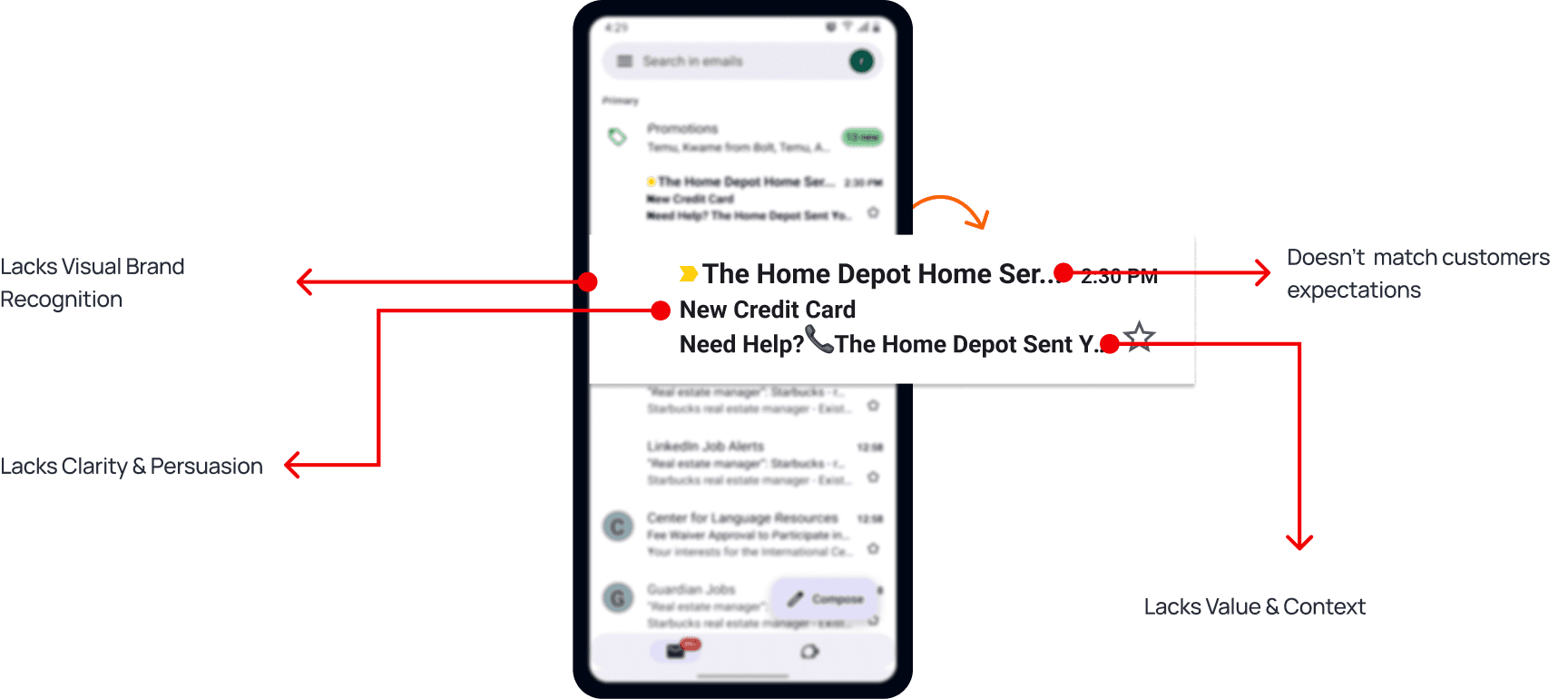
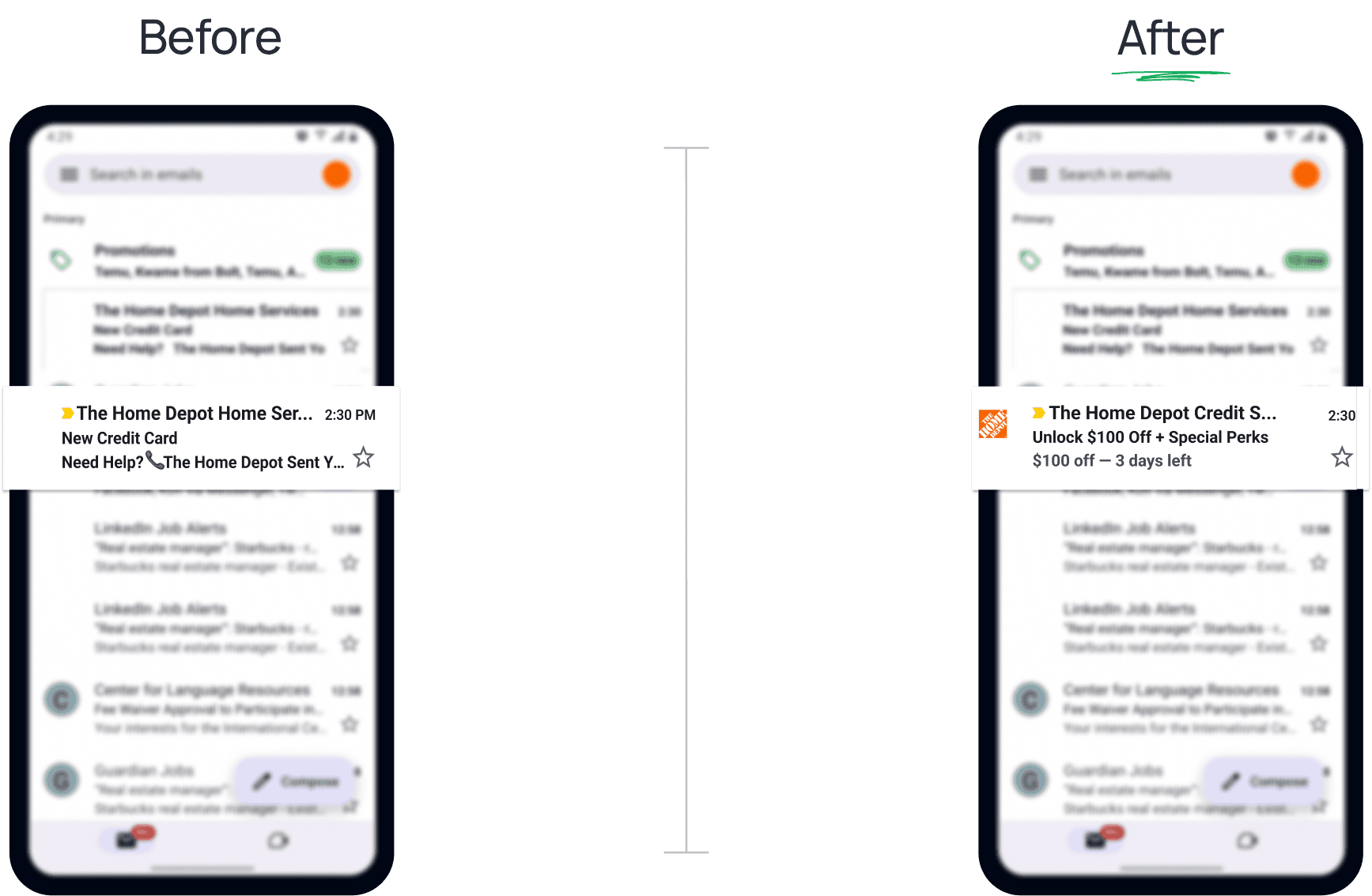
Inbox Row: Why It Falls Short

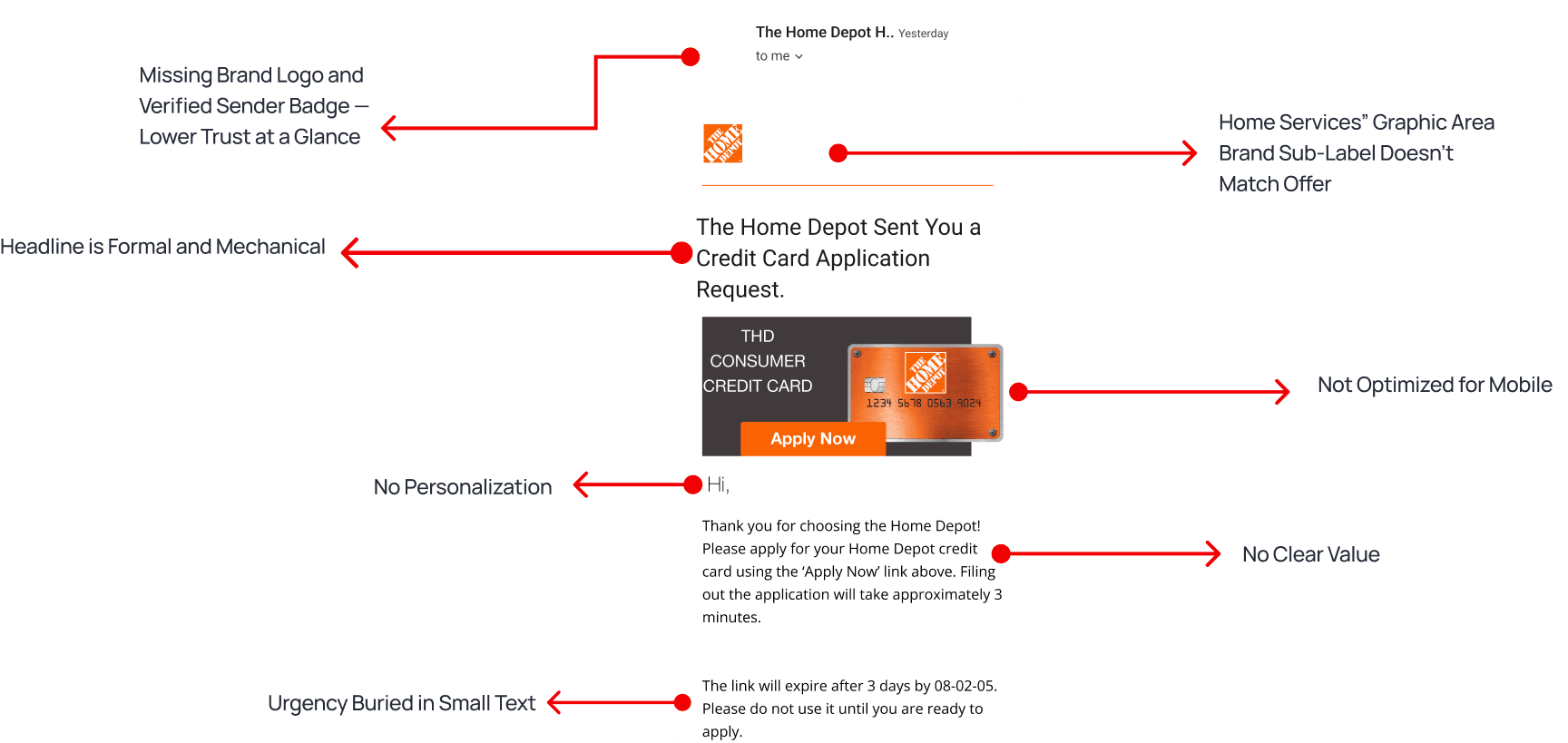
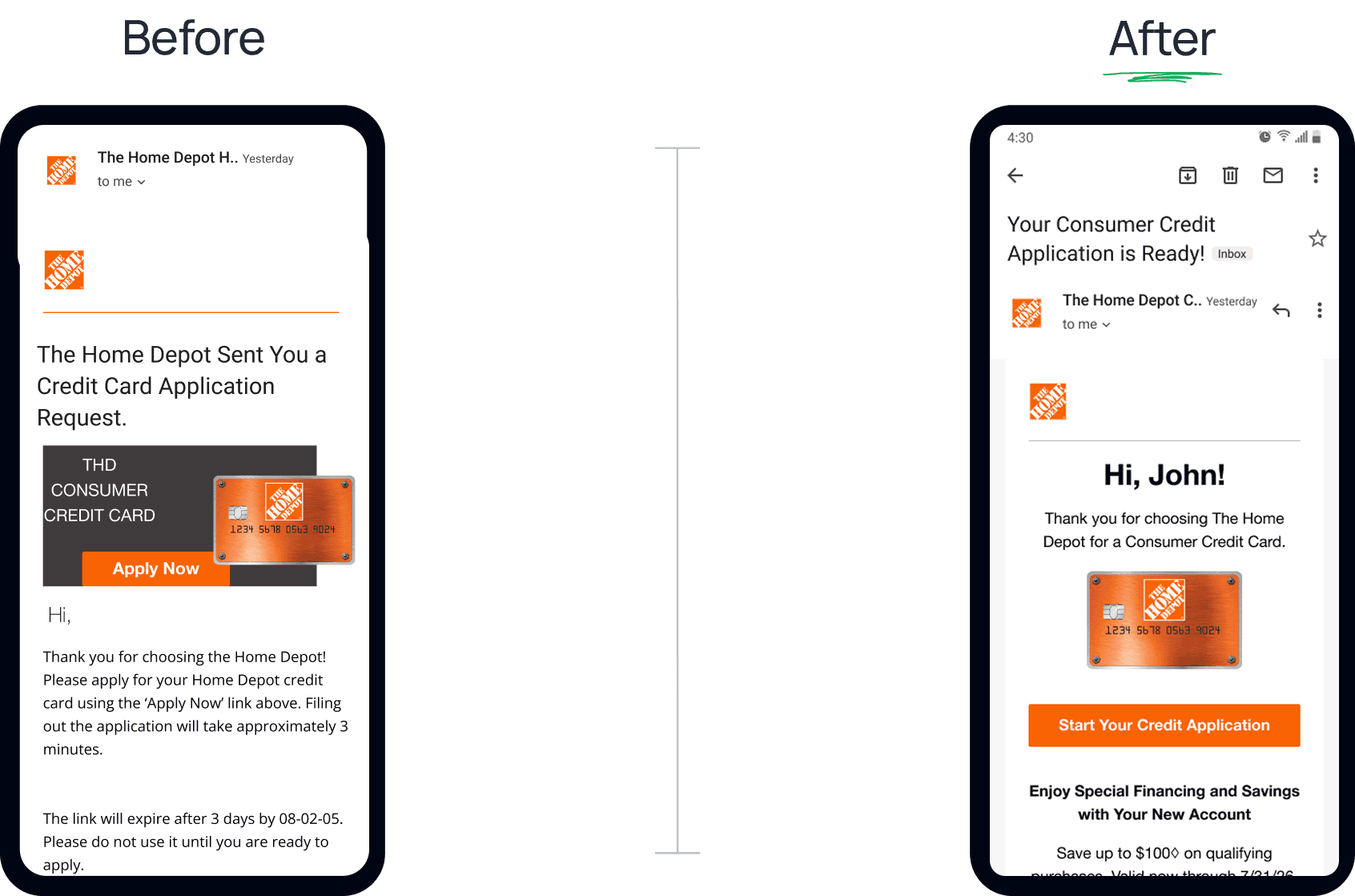
Opened Email: Why It Falls Short


Prioritized Issue Analysis
Journey Failure Map
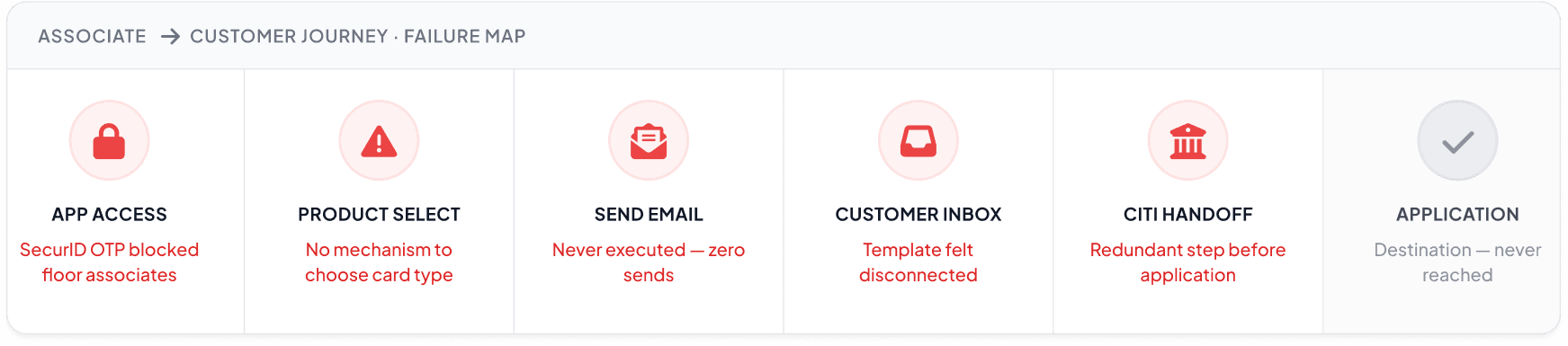
"The associates having credit conversations every day had no access at all."
03 Research
I walked the journey myself before designing anything
Using the store manager's access, I walked the full journey end to end: the associate-facing HD Phone app, the customer inbox view, the opened email, and the linked application flow. Each step surfaced specific failure points — the inbox row didn't differentiate the email from other store communications, the opened email buried the CTA, and the application flow introduced friction that broke the momentum a floor associate had built with a customer.
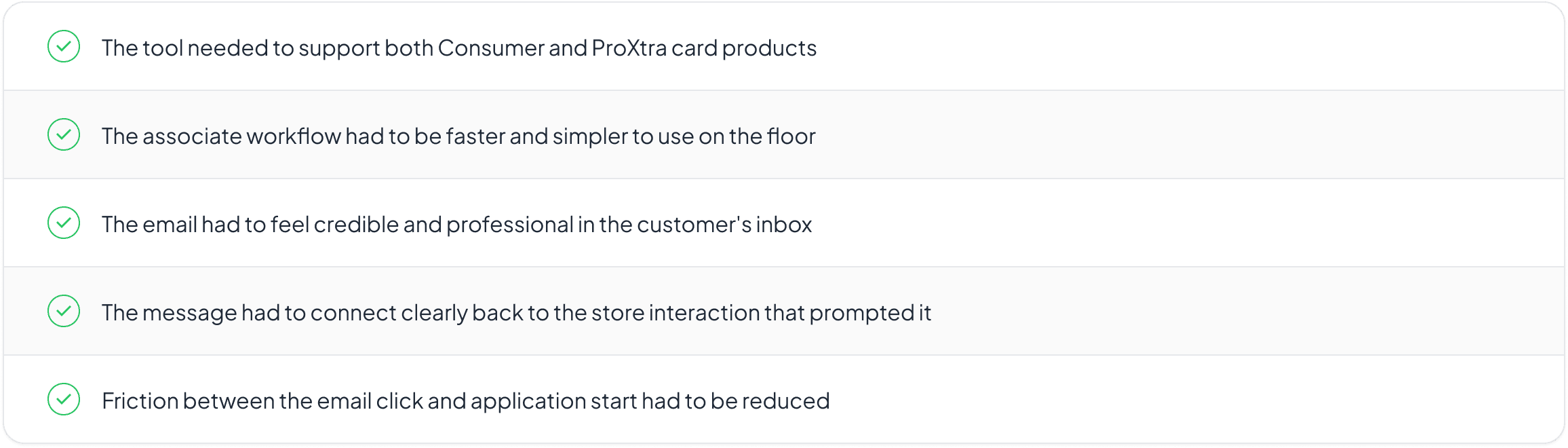
That audit made the redesign criteria concrete and defensible. Every decision that followed was traceable back to something observed in the field, not assumed at a desk.
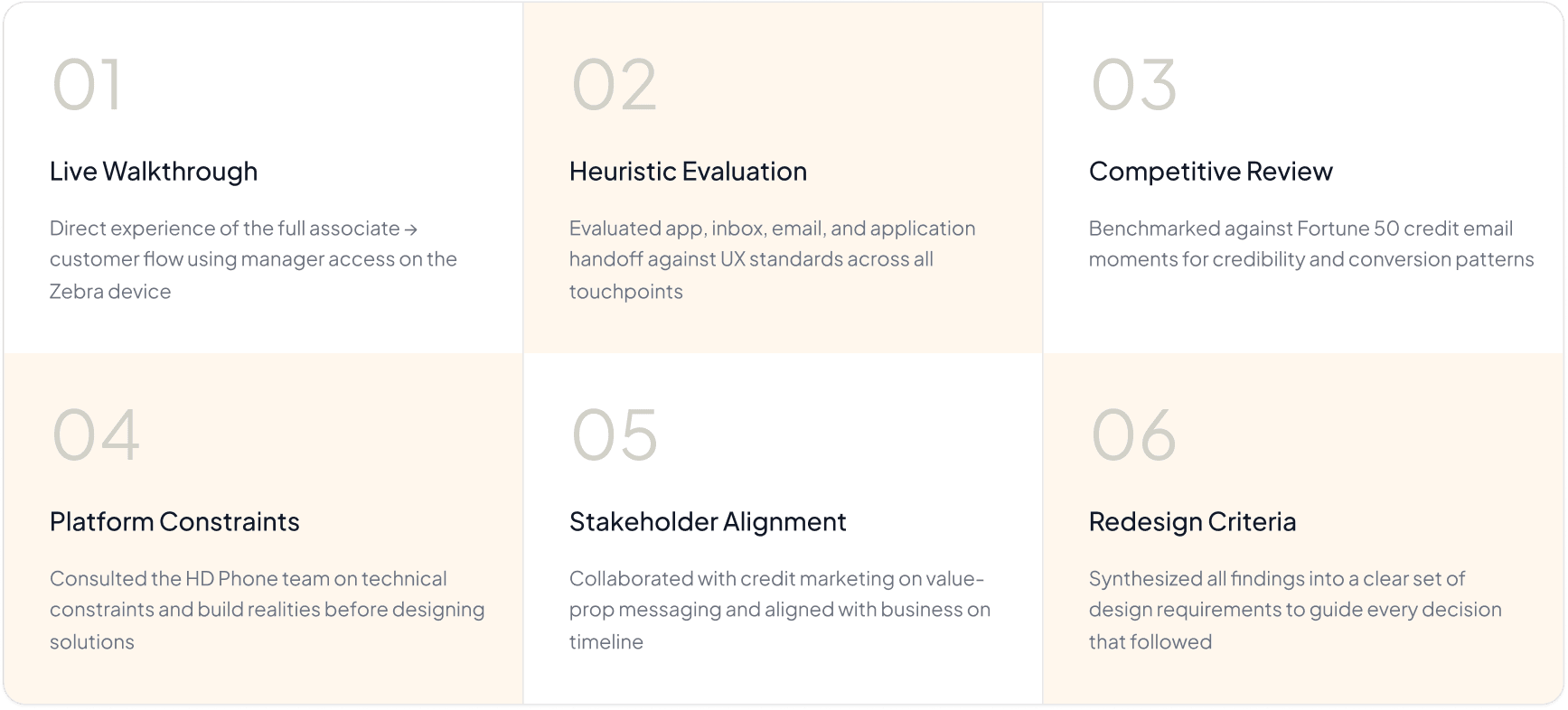
Walking the journey myself gave the findings credibility that a secondhand audit couldn't. When I brought this evidence to the business, it wasn't a design opinion — it was a documented field reality.


"I walked the full journey myself — the associate app, the customer inbox, the opened email, the application flow."
04 Key Decision
The evidence made the path forward obvious to everyone in the room
I brought the findings back to the business with a structured presentation — screenshots of what associates saw, video recordings from the store visit, direct quotes from associates who had no idea the tool existed, and usage data from our analyst confirming the tool was effectively inactive across the store base.
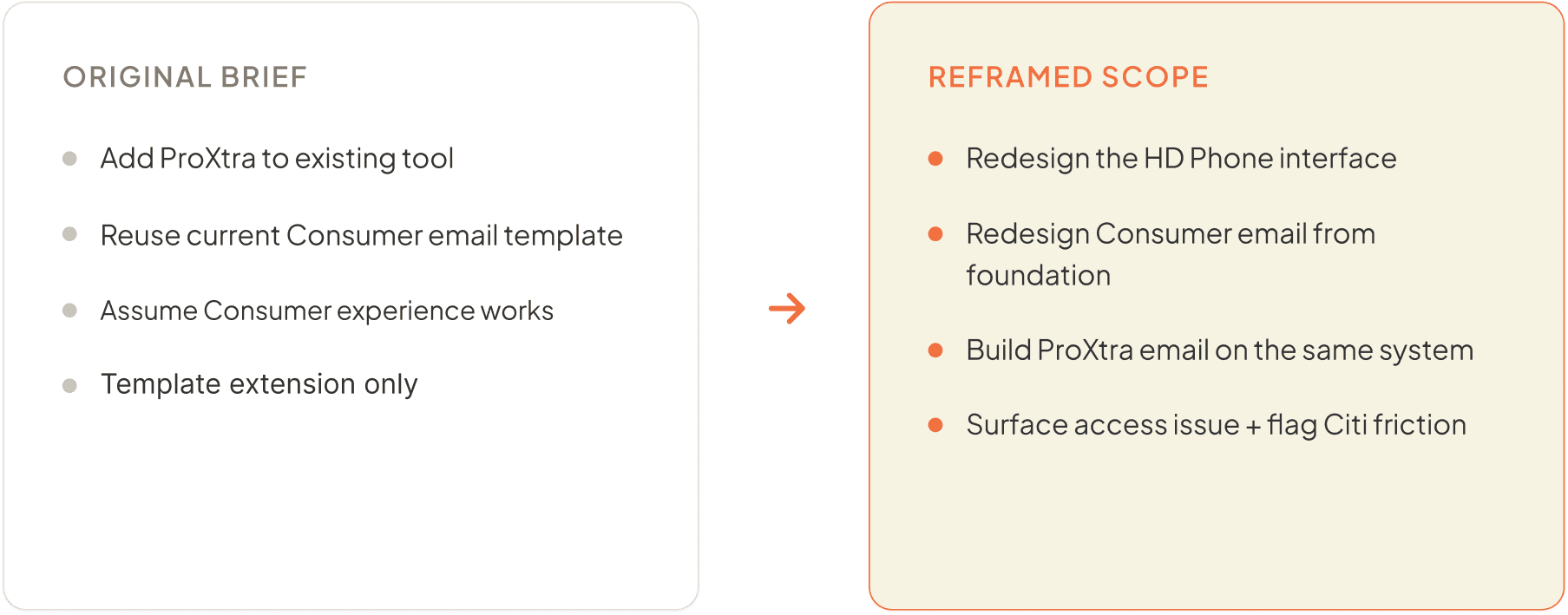
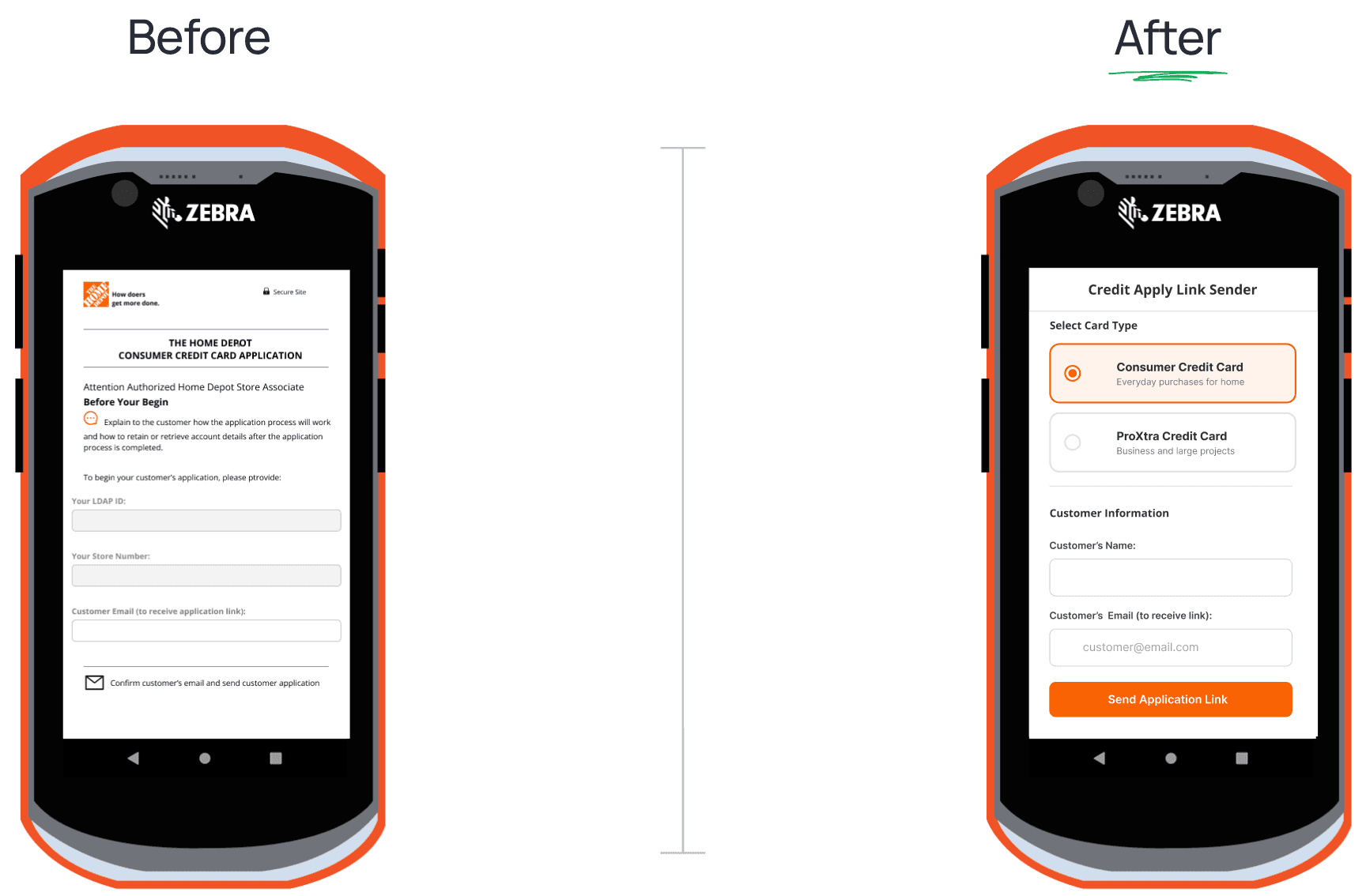
The evidence changed the room. Instead of adding a ProXtra template on top of a broken foundation, the business stakeholder aligned immediately: the tool needed to be migrated off Salesforce entirely and rebuilt on a platform any associate could access. What started as "add a second card option" became a full redesign of the associate tool and both customer-facing email flows — Consumer and ProXtra — built together on a system that could actually reach the floor.
This was the moment the project became real. The scope expansion wasn't a risk — it was the only path to an outcome the business actually needed.

"When the evidence is there, the right path becomes obvious to everyone in the room."
05 The Solution
One rebuild. Two cards. A system that could actually reach the floor.
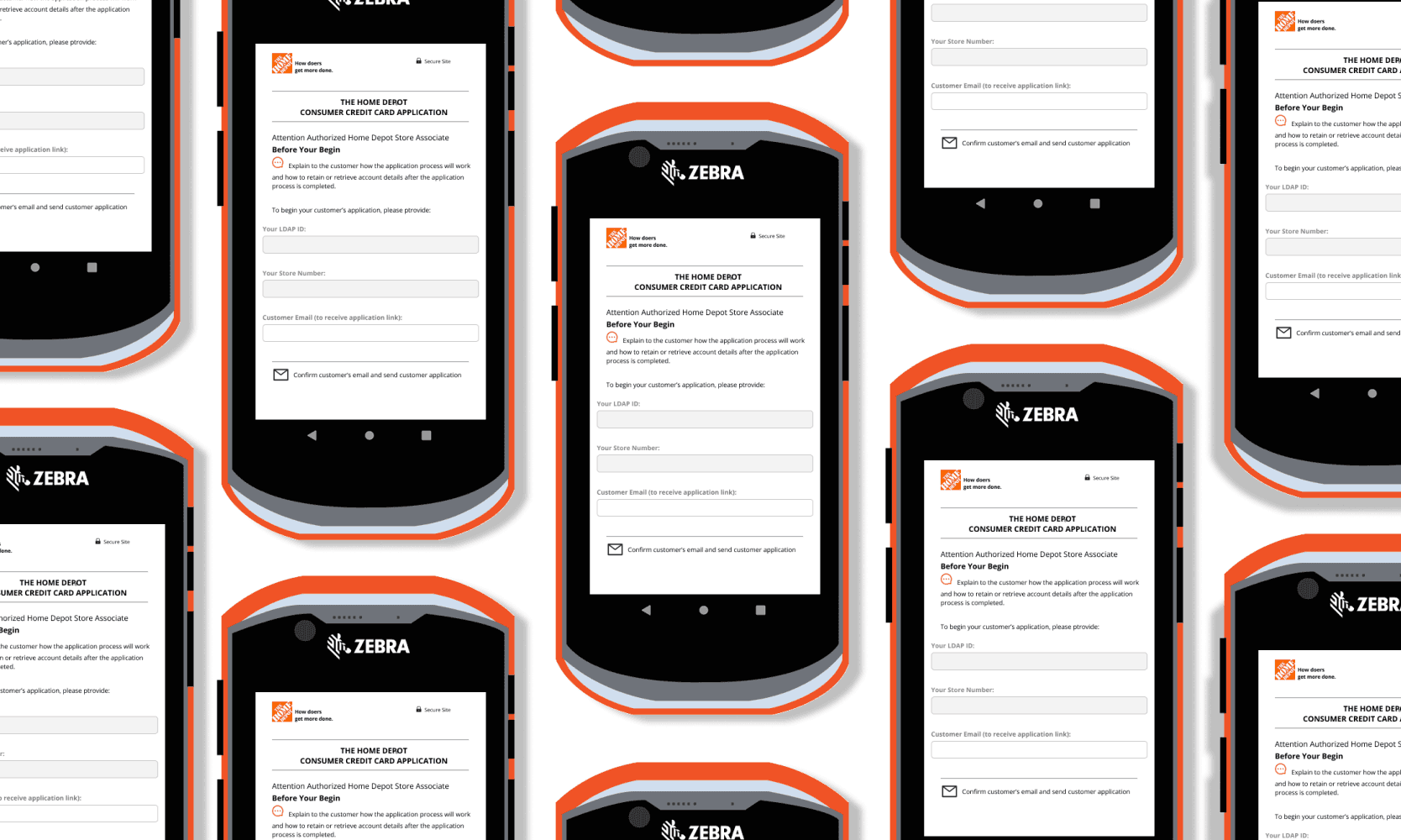
With the scope reframed, I redesigned the experience across the HD Phone interface and both customer-facing email flows — Consumer and ProXtra — built together on a platform any associate could access. Because there was no dedicated product manager on this work, I also drove coordination across marketing, legal, Citi Bank, and Salesforce engineering, moving dependencies forward and keeping the work on track without a PM in the middle.
HD Phone Interface — Before & After
Inbox Row — Before & After
Opened Email— Before & After



06 Impact
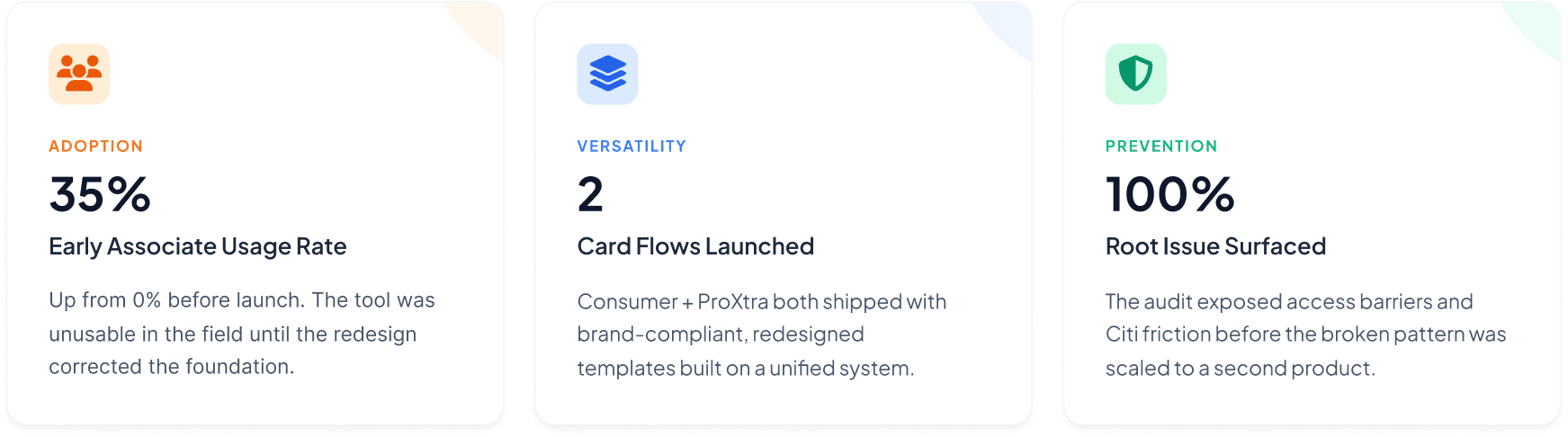
Associate adoption
0% → 35%
The redesign increased early associate adoption from 0% to 35% and enabled the launch of both Consumer and ProXtra card flows through a stronger, unified system — built on a platform that could finally reach the associates who needed it.
07 Learnings
The most important decisions don't happen in Figma
The store visit didn't surface a UX problem. It surfaced a platform decision that nobody had caught — one that was silently preventing the tool from ever working. The design work that followed, the migration, the expanded scope, the full rebuild, all of it traced back to going to validate the real experience before opening Figma.
If you're going to push a business stakeholder to change direction, show up with proof. Screenshots, video, field quotes, usage data. When the evidence is airtight, the right path becomes obvious to everyone in the room — and the conversation stops being about opinion.
"The store visit didn't surface a UX problem. It surfaced a platform decision nobody had caught."